FOR IMMEDIATE RELEASE
JULY 13, 2011
CONTACT:SAN DIEGO ZOO
PUBLIC RELATIONS
619-685-3291
WEBSITE: www.sandiegozoo.org
PHOTO NEWS RELEASE
TINY TAKIN TAKIN’ TRAINERS’ HEARTS
San Diego Zoo Welcomes Its 51st Takin
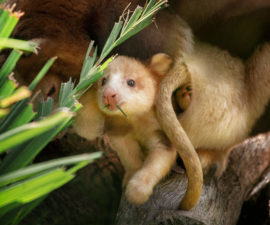
Even though this one-week-old Sichuan takin isn’t eating solid food, she’s ready to learn, and on Wednesday (July 10, 2011) she mimicked her mom chewing acacia. The calf was born on July 5, 2011. She was named Duli, which means “independence” in Mandarin, because she was born so close to the Fourth of July. Duli is the 51st takin to call the Zoo home. Her mother is Blondie.
“She’s just adorable,” said Bob Cisneros, a San Diego Zoo animal care supervisor. “And it’s really special for us because it’s been at least a couple of years since we had a girl.”
The first Sichuan takin born outside of China was born at the San Diego Zoo in 1989. Takins are a type of hoofed mammal that is sometimes referred to as a goat antelope because it has characteristics in common with both species.
Duli weighs about 20 pounds, while adult takins at the Zoo have weighed up to 880 pounds. The tiny takin has been exploring and climbing around her enclosure and getting to know the other seven takins in her herd. Over the next few months, her horns will come through and her coat will get lighter in color, longer and shaggier. Young takins are much darker than adults to protect them from predators in the forest.
Takins, which are considered an endangered species by the International Union for the Conservation of Nature (IUCN), live in the bamboo forests of China and the eastern Himalayan Mountains of Asia. They are skilled climbers and migrate to forage for food. The main cause of their declining numbers in the wild is loss of habitat due to farming, logging and mining operations. China has given the takin full protection under its laws, which is the same protection given to giant pandas.
The 100-acre San Diego Zoo is dedicated to the conservation of endangered species and their habitats. The organization focuses on conservation and research work around the globe, educates millions of individuals a year about wildlife and maintains accredited horticultural, animal, library and photo collections. The Zoo also manages the 1,800-acre San Diego Zoo Safari Park (historically referred to as the Wild Animal Park), which includes a 900-acre native species reserve, and the San Diego Zoo Institute for Conservation Research. The important conservation and science work of these entities is supported in part by The Foundation of the Zoological Society of San Diego.
Photo taken July 13, 2011, by Tammy Spratt, San Diego Zoo